Your kitchen should make everyday life easier, not harder. If the fridge blocks the walkway, the counters always feel crowded, and there is never enough storage, the problem is usually the layout.
A smart kitchen renovation can improve flow, reduce clutter, and make cooking more comfortable. This guide shares practical ideas to help you build a kitchen that looks good and works well every day.
Many homeowners start a kitchen renovation by picking cabinet colors, countertops, and finishes. But looks should not come first.
A pretty kitchen is great, but if the layout feels awkward, you will notice it every single day.
A kitchen becomes harder to use when the layout is not planned well. Blocked walkways, poor lighting, awkward appliance placement, and too much distance between the sink, stove, and oven can slow everything down.
These small problems make cooking feel tiring, messy, and less safe.
Poor ventilation can also create issues. Moisture may settle on walls and cabinets, grease can build up faster, and food smells can stay longer. Over time, this can damage surfaces and make the kitchen harder to keep clean.
Before touching cabinets, counters, or appliances, plan your layout. This is where efficiency is built or destroyed.
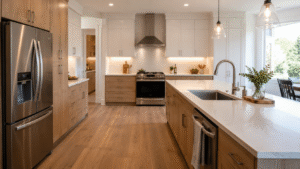
The kitchen work triangle connects the sink, stove, and refrigerator.
A good rule is to keep each side between 4 and 9 feet, with the total distance under 26 feet. This space should also stay clear so people are not walking through it while you cook.
When planned well, the triangle makes washing, cooking, and storing food feel smooth. When planned poorly, it adds extra steps and makes simple tasks feel harder.
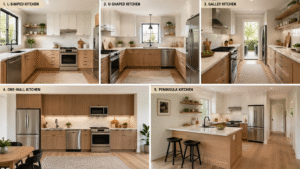
L-shaped layout:
Great for open-plan homes. It creates easy movement and leaves space for an island, dining area, or extra prep zone.
U-shaped layout: Best for kitchens with three walls. It gives more counter space, deeper cabinets, and strong storage on all sides.
Galley kitchen:Works well in narrow spaces. It uses two parallel walls and needs smart vertical storage, pull-out shelves, and clear counters.
For small kitchens, do not copy a large-home design. Choose a layout that makes your daily kitchen tasks easier.
Storage is where most kitchens have problems. Cabinets get full quickly, and counters become messy. Even after a renovation, clutter comes back in a few months.
The solution is smart storage design, not just adding more cabinets.
Visible clutter is partly a design problem. The solution is hiding storage inside the workflow.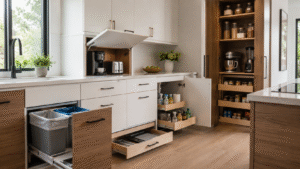
Hidden storage keeps the kitchen clean without making daily items hard to reach. Appliance garage cabinets hide toasters, coffee machines, and blenders while keeping them accessible.
Pull-out trash and recycling cabinets remove bins from the floor and improve hygiene. Toe-kick drawers use the space under base cabinets for flat items like trays and cutting boards.
Under-sink pull-out trays and wall organizers make awkward plumbing space useful. Built-in pantry cabinets also keep dry goods and small appliances in one organized area.
Near sinks and dishwashers, use sealed interiors, ventilation gaps, and moisture-resistant materials to protect cabinets over time.
A kitchen island is not just extra counter space. When designed correctly, it becomes your most-used storage zone.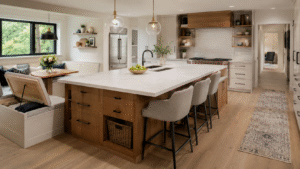
A kitchen island should add function, not just fill space. Choose one with drawers, cabinets, or seating so it improves storage and daily use.
Drawers on both sides can increase capacity, while a breakfast bar adds seating without wasting the base. Banquette seating with lift-up seats can hide extra items in dining areas.
For renters or small kitchens, a rolling cart is a flexible storage option.
Before adding an island, ask: will it improve the kitchen, or just make the room feel crowded?
Custom cabinetry can also help you use every inch by fitting your exact wall size, appliance layout, and storage needs.
Small kitchens require sharper decisions. Every inch counts.
The most common mistake in compact kitchens is adding more furniture. The better approach is optimizing vertical space and using multi-function solutions.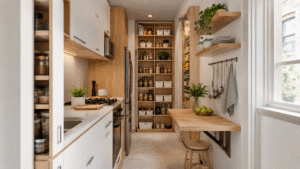
Small Kitchen Remodel Ideas That Save Space
Small kitchens work best when every inch has a purpose. Instead of trying to create more space, focus on better storage, smooth movement, and flexible surfaces.
In a galley kitchen with limited cabinets, full-height shelving can add storage without using floor space. Pull-out pantry units make narrow cabinets easier to use, while a fold-down wall table can give you extra prep or dining space when needed. Floating shelves, wall hooks, and rails also keep daily items close without crowding the counters.
Compact appliances help too because they fit the space without blocking movement. A space-saving kitchen is not just about making the room look bigger. It is about making cooking, cleaning, and storage easier every day.
For apartments and studio kitchens, a focused small kitchen remodel often works better than changing the entire layout.