
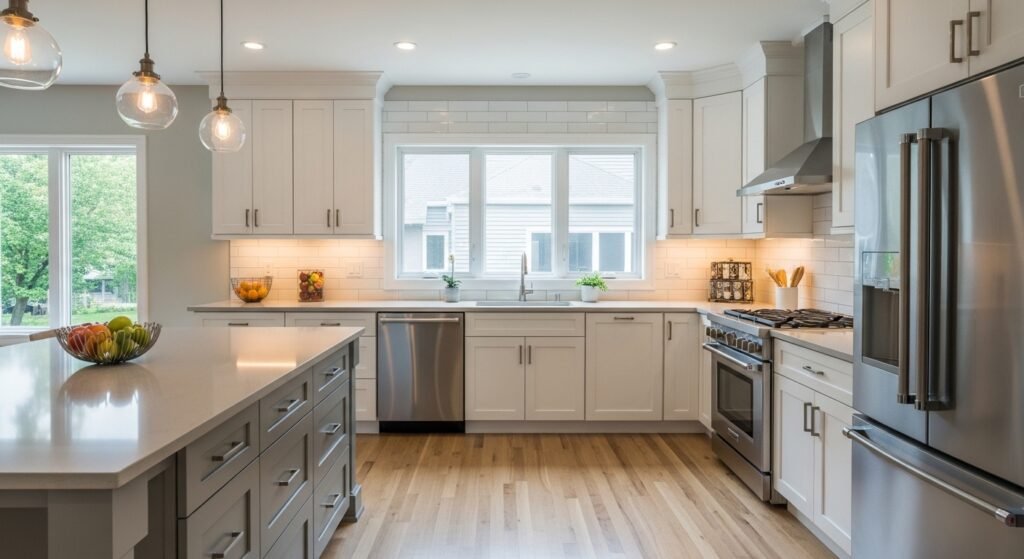
Imagine opening your kitchen every morning to a refrigerator door that blocks the walkway, a trash bin sitting in the middle of the floor, and countertops so cluttered you can barely prep a meal. The stove is steps away from the sink, but getting there means squeezing past someone opening the dishwasher. Sound familiar?
This is not a design problem. It is a planning problem.
A well-renovated kitchen reduces daily friction, improves hygiene, supports better airflow, and makes cooking feel effortless. This guide walks through the decisions that actually matter: layout, storage, technology, and budget. So your renovation delivers long-term results, not just a prettier space.
Why Functionality Matters More Than Looks in a Kitchen Renovation
Most homeowners start a kitchen renovation by choosing cabinet finishes and countertop materials. That is the wrong starting point.
Looks fade. Poor workflow frustrates you every single day.
The real costs of a bad kitchen layout:
A kitchen can be hard to use if things are in the wrong place. If the refrigerator blocks the way, everyone has to step around it. A trash can in the middle of the walkway can get in the way every day. Without lights under the cabinets, you might work in your own shadow. If the sink, stove, and oven are far apart, you have to walk a lot more while cooking.
This makes cooking tiring, slow, and even a little unsafe.
Bad ventilation makes things worse. Cooking moisture sticks to walls, gets into cabinets, and can cause mold. Grease builds up faster, and smells stay in the kitchen. Over time, this can damage surfaces and make the kitchen less clean.
What good kitchen design actually solves:
A kitchen that is easy to use helps protect your back and joints.
A good kitchen layout makes cooking faster and easier.
Proper ventilation keeps heat, steam, and grease under control.
A smart kitchen design stops you from moving around too much while cooking.
Being practical isn’t a luxury it’s the most important part of any kitchen remodel.
Start with Smart Kitchen Layout Planning
Before touching cabinets, counters, or appliances, plan your layout. This is where efficiency is built or destroyed.
The Kitchen Work Triangle Layout
The kitchen work triangle links the three main areas you use most: the sink, the stove, and the refrigerator.
The rule is simple. Each side of the triangle should be 4 to 9 feet, and the total around it should be less than 26 feet. Try to keep people from walking through this triangle while cooking.
When it is done right, moving between washing, cooking, and storing food feels natural and easy.
When it is done wrong, like the fridge in one corner, the sink across the room, and the stove on another wall, cooking means a lot of extra walking.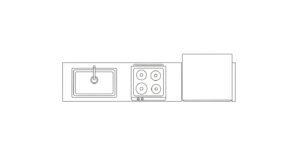
Choosing the Right Layout Style
Your layout style depends on your kitchen’s dimensions and how many people use the space at once.
L-shaped layout: Works well for open-plan homes. Creates a natural work triangle. L-shaped kitchen layout ideas often include an island opposite the counter run to add workspace and storage.
U-shaped layout: Best for dedicated kitchen spaces with three walls. Offers maximum counter space. U-shaped kitchen storage solutions include deep base cabinets on all three sides and full overhead cabinetry.
Galley kitchen: Two parallel walls. Efficient for one cook. Galley kitchen storage ideas focus heavily on vertical space and pull-out systems since counter depth is limited.
One-wall layout: Common in apartments and studios. Best layout for small kitchen situations where space is the main constraint.
Peninsula or open-plan: Adds a connected counter extending from a wall. Works as a room divider, breakfast bar, and extra prep surface simultaneously.
Choose layout based on how you actually cook not how the kitchen looks in a showroom.
For compact apartments or studio kitchens, a small kitchen remodel approach often delivers better results than trying to replicate a larger home kitchen design.
Smart Kitchen Storage Idea That Eliminate Clutter
Storage is where most kitchens have problems. Cabinets get full quickly, and counters become messy. Even after a renovation, clutter comes back in a few months.
The solution is smart storage design, not just adding more cabinets.
Cabinet Storage Optimization
Most kitchens waste vertical space. Standard wall cabinets stop 12 to 18 inches below the ceiling. That gap collects dust and does nothing.
Install floor-to-ceiling cabinets. Ceiling height cabinets double your vertical storage without expanding your footprint. Upper sections store seasonal items. Lower sections handle daily use.
Replace fixed shelves with deep drawer kitchen storage. Drawers give you full visibility and access. You stop digging through the back of a cabinet to find a pot.
Add pull-out pantry shelves inside existing cabinets. These convert dead space into accessible storage instantly.
Hardware matters more than most people think:
- Soft-close kitchen drawers prevent slamming and extend cabinet life
- Pull-out racks inside deep cabinets make pots and pans accessible
- Lazy-Susan units in corner cabinets eliminate the dead zone problem
- Magic corner cabinet systems use rotating shelves to access corner space fully
- Drawer dividers keep utensils organized without extra effort
Dead corner cabinets are one of the biggest storage losses in any kitchen. Do not leave them without a functional insert.
Hidden and Built-In Storage Solutions
Visible clutter is partly a design problem. The solution is hiding storage inside the workflow.
Appliance garage cabinets sit on the counter with a roll-up or lift door. Toasters, coffee machines, and blenders stay accessible but out of sight when not in use.
Pull-out trash bin cabinets remove the bin from the floor entirely. This improves hygiene, eliminates odor spread, and opens up floor space. Pair it with a recycling cabinet kitchen setup — a dual-bin pull-out that separates waste without requiring two visible containers.
Toe kick drawer storage uses the space beneath base cabinets. These shallow drawers hold baking sheets, cutting boards, and flat items that otherwise take up cabinet space.
Under-sink storage solutions use wall-mounted organizers and pull-out trays to work around the plumbing. The area under the sink is often completely wasted in standard kitchens.
Built-in kitchen pantry cabinets consolidate dry goods, canned items, and small appliances into one organized column. This clears the rest of your cabinets for cookware and dishware.
Moisture protection matters here. Use sealed interiors, proper ventilation gaps, and materials that resist humidity in high-moisture zones near the sink and dishwasher.
Island and Multi-Functional Storage
A kitchen island is not just extra counter space. When designed correctly, it becomes your most-used storage zone.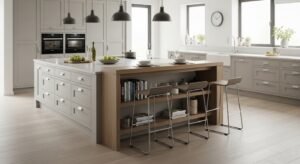
Kitchen island storage ideas that work:
- Island with drawers and cabinets on both sides increases capacity without wasting space
- A breakfast bar storage setup adds seating while keeping the underside functional
- Banquette storage seating — built-in bench seating with lift-up seats — adds significant hidden storage in kitchen dining areas
- Rolling kitchen cart storage works for renters or anyone who cannot install permanent fixtures
The question to ask before designing an island: does it increase kitchen storage space, or does it just fill the room?
An oversized island with no storage and no seating wastes square footage. A well-designed one becomes the most functional surface in your kitchen.
Custom cabinetry allows you to maximize depth, height, and corner space in ways that stock cabinets simply cannot match. Custom cabinets let you design around your exact wall dimensions, appliance sizes, and daily storage needs.
Small Kitchen Renovation Ideas for Maximum Space Optimization
Small kitchens require sharper decisions. Every inch counts.
The most common mistake in compact kitchens is adding more furniture. The better approach is optimizing vertical space and using multi-function solutions.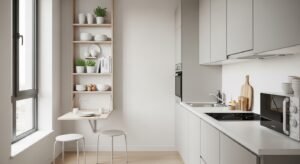
A practical example: A galley kitchen with no pantry and limited cabinet space can use full-height vertical shelving on the end wall, pull-out pantry units inside existing cabinets, and a wall-mounted foldable table that folds flat when not in use. This adds prep space, storage, and organization without changing the floor plan.
What works in small kitchens:
- Vertical kitchen storage uses wall height instead of floor space
- Floating shelves keep items accessible without cabinet bulk
- Hidden fold-down tables add prep or dining space on demand
- Compact kitchen solutions prioritize function in every surface
Space-optimized kitchen design is not about making a small kitchen feel big. It is about making it work without compromise.
For apartments and studio layouts, a focused small kitchen remodel often delivers better results than trying to open walls or expand the footprint.
Modern Kitchen Renovation and Smart Technology Integration
Technology in the kitchen has moved past novelty. Some integrations genuinely improve daily functionality.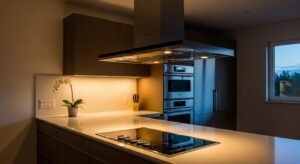
Lighting first:
Under-cabinet lighting kitchen setups eliminate working in shadow. LED strip lighting under cabinets improves task visibility on countertops directly. This is one of the highest-impact, lowest-cost upgrades in any kitchen renovation.
Ventilation and airflow:
Proper ventilation reduces humidity, controls heat buildup, and removes airborne grease before it settles on surfaces. A ducted range hood vented to the exterior outperforms recirculating models significantly. Proper airflow is a hygiene and maintenance decision, not just a comfort one.
Smart appliances:
Space-saving appliances kitchen integration includes built-in microwave cabinets that remove counter clutter and integrated refrigerator cabinet panels that blend the fridge into the cabinetry line. These improve both aesthetics and workflow.
Sensor faucets, induction cooktops, and smart dishwashers reduce effort and energy use in measurable ways.
Compliance and safety:
Any electrical work, ventilation installation, or structural change requires proper permits. Work with a licensed contractor or designer who understands local compliance requirements. Safety and long-term durability depend on getting this right from the start.
Budget vs. Luxury Kitchen Storage Solutions
Functionality is achievable at every budget. The decisions change, not the outcome.
Budget-focused approach:
- DIY kitchen storage ideas like tension rod organizers, shelf risers, and drawer inserts cost very little and work immediately
- Affordable kitchen storage ideas often start with decluttering and reorganizing before spending anything
- Cabinet refacing replacing door fronts and hardware while keeping the existing boxes delivers a significant visual upgrade at a fraction of full replacement cost
- Modular kitchen cabinets from flat-pack systems offer flexibility without custom pricing
Luxury approach:
- High-end kitchen cabinets use solid wood construction, full-extension drawer slides, and precision joinery that lasts decades
- Premium kitchen organization ideas include custom pantry systems with pull-out shelving, integrated lighting, and exact-fit dividers
- Quartz, marble, and granite countertops offer durability alongside aesthetics
- Luxury pantry systems treat storage as a designed space, not an afterthought
Neither approach is inherently better. The best kitchen storage solution is the one that fits your actual usage patterns and budget without requiring you to compromise on workflow.
How to Plan a Kitchen Renovation for Long-Term Efficiency
A kitchen renovation planned carefully at the start avoids expensive corrections later.
Start with documentation:
Measure everything. Note window and door positions, utility locations, ceiling height, and structural walls. This information drives every decision that follows.
Work with the right people:
A kitchen designer translates your workflow needs into a functional plan. A contractor handles execution. An architect is necessary if you are moving walls or changing the structure. Skipping any of these on a complex renovation usually costs more in corrections than their fees.
Plan for durability:
Moisture control determines how long your renovation lasts. Use water-resistant materials near the sink and dishwasher. Seal gaps where moisture can penetrate cabinet boxes. Ensure your ventilation system handles the actual cooking load in your kitchen.
Kitchen storage planning should account for how your needs may change. A family kitchen used by multiple people needs different storage logic than a single-occupant apartment kitchen.
If your kitchen upgrade is part of a larger home remodel and renovation project, coordinate trades early. Electrical, plumbing, and cabinetry timelines need to align or the project stalls repeatedly.
Permits matter:
Any work involving electrical panels, gas lines, plumbing rerouting, or structural changes requires permits. Non-permitted work creates problems at resale and can void insurance coverage. Build permit timelines into your kitchen remodeling planning guide from the start.
Common Kitchen Renovation Mistakes That Reduce Functionality
Most renovation regrets come from decisions that prioritized appearance over how the kitchen actually gets used.
Oversized island: An island that fills the room blocks circulation. You need at minimum 42 inches of clearance on each side for comfortable movement, 48 inches if multiple people cook simultaneously.
No trash and recycling plan: This is overlooked in almost every renovation. Plan dedicated pull-out storage for waste before cabinets are ordered. Retrofitting it later is expensive and awkward.
Poor ventilation: Choosing a range hood based on looks rather than CFM rating leaves you with a kitchen that traps moisture and grease. Measure your cooktop output and match the ventilation accordingly.
Style over functionality: A beautiful kitchen that requires you to crouch to reach cookware or strain to access upper shelves creates daily discomfort. Counter height, shelf spacing, and drawer depth should match the people using the kitchen.
Ignoring ergonomics: Standard counter height is 36 inches. Taller households may benefit from 38 to 42 inches. Wall oven height, microwave placement, and upper cabinet reach should all be calibrated to the people cooking, not to standard dimensions.
No clearance around the dishwasher: A fully open dishwasher door should not block the main kitchen walkway or the adjacent cabinet. This is a layout error that cannot be corrected without moving the appliance.
Final Thoughts — Designing a Kitchen That Works for Your Life
A functional kitchen is not complicated. It moves efficiently, stores intelligently, and supports the way you actually cook.
The decisions that matter most happen before a single cabinet is ordered. Layout planning, storage logic, ventilation design, and workflow analysis these determine whether your renovation improves your daily life or just changes how your kitchen looks.
Prioritize function first. Let design serve it.
A kitchen that works well every day, stays clean easily, and adapts to your routine is worth far more than one that photographs beautifully but frustrates you at 6 PM on a Tuesday.
Plan deliberately. Build for the long term. The result takes care of itself.