Planning a kitchen remodel in an old home? Don’t trust what you see.
What looks like a simple upgrade can reveal hidden problems, like old wiring, plumbing issues, and structural damage. These issues are one of the biggest reasons why most kitchen remodels go over budget.
This guide explains the hidden costs of kitchen remodeling in older homes and shows you how to avoid common mistakes that can increase your budget.
New homes are built with modern systems and standard layouts, but older homes are not.
Remodeling a kitchen in an old house means dealing with years of changes and outdated construction methods.
Many problems stay hidden behind walls and under floors.
Wiring may be old, floors may be damaged, and pipes can be worn out or failing.
You can’t just plan for what you see you must plan for hidden issues too.
That’s why kitchen remodels in older homes often take more time and cost more money than expected.
Original Charm Can Limit Modern Changes
Historic home kitchen remodels require a careful balance. You might want a modern open layout, but removing a wall could affect the structure of a century home kitchen.
Vintage details original crown molding, antique hardware, heritage tile work add charm but limit how aggressively you can redesign the space. Traditional home kitchen remodel projects often require custom solutions rather than standard ones.
Demolition day is when old house kitchen renovation projects get real. Contractors pull off cabinets, open walls, and lift floors and that’s when surprises show up.

Old kitchen electrical problems are extremely common. Knob-and-tube wiring, two-prong outlets, and panels that can’t handle modern appliances are all red flags.
Modern kitchens need dedicated circuits for refrigerators, dishwashers, microwaves, and ovens. Bringing old wiring up to code is expensive but necessary for safety.
Structural issues in kitchen remodels are often caused by years of moisture, pest damage, or settling. You might find:
These repairs aren’t optional. They have to be fixed before any new finishes go in.
Old kitchens are not just a design problem they can also be a health problem.
Mold can grow behind walls near sinks and dishwashers where water has been leaking for a long time. Many older homes may also have asbestos in floor tiles, insulation, or walls, especially homes built before the 1980s. Lead paint is also common in homes built before 1978.
These problems are usually hidden and only found when the kitchen is being remodeled. Special trained workers must test and remove these materials safely.
If this is not done properly, it can be dangerous for your family and workers.
Most homeowners go into old home kitchen remodels with a number in mind. That number almost always changes.
Here’s why kitchen remodel cost for old homes tends to surprise people and why understanding why most kitchen remodels go over budget before you start can save you real money.
One unexpected plumbing problem can add $3,000 to $8,000. One section of mold remediation can add $2,000 to $6,000. These aren’t rare — they’re normal in old homes.
Hidden kitchen renovation costs pile up fast once walls open up.
Old homes were not built to today’s rules and safety standards. When you remodel, contractors must update things to meet current building codes. This can include installing new electrical panels, safe outlets (GFCI), better ventilation, and sometimes new gas lines. These updates are needed to make the home safe and get approval for permits. These upgrades aren’t cosmetic. They’re required.
Standard cabinets don’t always fit old kitchen layouts. Walls aren’t always straight. Ceilings aren’t always level. Contractors often need to do custom work and custom work costs more than stock solutions.
When a hidden problem appears, work stops. Contractors wait for inspections, specialized materials, or licensed tradespeople. Those delays cost money in extended labor, temporary kitchen setups, and rescheduling fees.
Here’s where the money actually goes in a typical old home kitchen remodel cost breakdown.
Don’t skip the inspection. It’s the cheapest thing you’ll pay for and gives you the clearest picture of what you’re working with.
Total realistic range: $20,000 – $75,000+ depending on home size, scope, and what’s found during demo.
These mistakes don’t just cost money. They cost time, stress, and sometimes the quality of the final result.
Starting a project without checking first is one of the most expensive mistakes you can make. A full inspection before renovation helps find problems early, before they turn into big and costly surprises during the work.
Set aside 20% to 30% of your total budget as a contingency. Not 10%. Not 5%. Old homes need a bigger buffer.
Putting new cabinets over bad plumbing is a waste of money. You should always fix the main systems first, like electrical work, plumbing, and the house structure, before spending money on looks and design.
Many homeowners remove original features and later regret it. Things like hardwood floors, tin ceilings, and old wood details make a home special and valuable. You should only remove them if they are badly damaged.
The best contractor for an old house remodel isn’t always the cheapest one or the one with the most modern portfolio. You need someone who understands old framing, historic materials, and code compliance for older structures.
Ask directly: “Have you worked on homes built before 1960?”
Here’s how professionals approach this kind of project without cutting corners.
Before any design decisions, do a full inspection. Structural, electrical, plumbing, and hazardous materials. Know what you’re dealing with before you plan what you want.
Mold, asbestos, lead, outdated wiring, and failing pipes are not cosmetic issues. They must be resolved before renovation begins. This protects your family and keeps the project on track.
A real budget includes all categories: permits, demo, repairs, systems, finishes, and contingency. Don’t just budget for the kitchen you want — budget for the house you have.
Old home kitchen renovation guides will tell you that standard layouts rarely work. Use a designer familiar with older homes who can create custom cabinet configurations, smart storage, and functional workflow in non-standard spaces.
For removing dangerous materials, you should hire licensed experts. For saving old design details, use skilled workers who know restoration work. For electrical and plumbing work, choose people who understand old houses. A kitchen remodel in an old home should include specialist advice, not just a general contractor.
Updating doesn’t mean erasing. The best old home kitchen remodels feel modern and timeless at the same time.
Original hardwood floors, crafted-style cabinets, farmhouse sinks, and old window trim can add beauty to a home. If these features are in good condition, you should keep them. It is better to restore them instead of replacing them.
You can put modern appliances behind old-style panels so they match the kitchen design. You can also use modern quartz countertops with vintage-looking fixtures. The goal is to have both good function and nice style, not just one or the other.
A bungalow does not look good with shiny modern hardware. A Victorian kitchen also does not suit simple flat cabinets. You should match the design style to the age and type of the house. This helps the kitchen look natural and well-balanced. It also keeps the home more attractive and can increase its value.
Don’t try to turn a small vintage kitchen into a chef’s showroom. Improve what matters storage, lighting, ventilation, counter space without gutting the personality of the room.
Old kitchens were built for different lifestyles. They’re often small, narrow, poorly lit, and lacking in storage. Smart design fixes that.
In a galley-style old kitchen, keep one clear work path. Use upper cabinets to the ceiling. Add pull-out drawers instead of deep lower cabinets. Avoid large islands in small spaces they block movement.
Use the space going up the wall. If there is room, add a tall pantry cabinet. You can also install pull-out shelves, drawer dividers, and storage under the sink. In old kitchens, storage should use every small space, including corners and walls.
Old kitchens often have one overhead light and no real ventilation. Add under-cabinet lighting, recessed ceiling lights, and a proper range hood vented to the outside. Good lighting makes a small kitchen feel larger. Good ventilation keeps air clean and reduces moisture buildup.
This is the honest question. Here’s the honest answer: it depends.
The house is still strong and safe.
You plan to live there for a long time or sell it in a good market.
The kitchen is unsafe, hard to use, or very old.
The remodel will fix health problems like mold or lead.
Kitchen renovation return on investment in older homes is strong when the project is well-planned and the home’s location supports it.
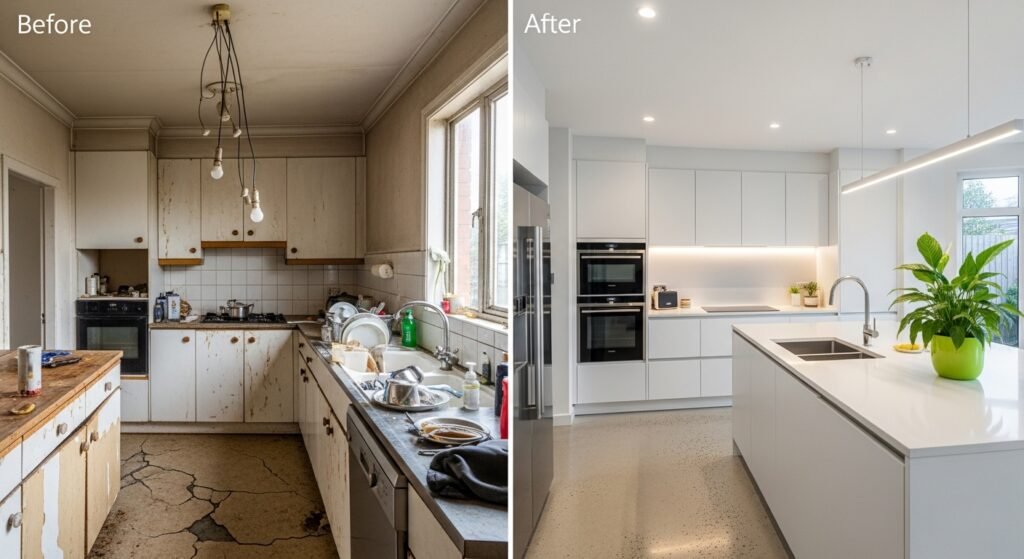
If the roof is failing, the foundation is cracked, or the electrical system is dangerous — fix those first. A beautiful kitchen in a structurally compromised home is bad prioritization.
A properly done old home kitchen remodel increases home value, improves daily function, and eliminates long-standing safety issues. When done right, it’s one of the highest-ROI projects a homeowner can make.
Expect the old home kitchen remodel timeline to be longer than you think.
This phase takes longer in old homes because inspections often reveal issues that require plan revisions.
This is when hidden problems surface. Budget extra time here for testing (asbestos, lead) and decisions.
This is the phase most responsible for delays. It cannot be rushed without risking safety or code compliance.
Total realistic timeline: 3 – 6 months for a full old home kitchen renovation. Simpler projects may finish faster. Complex ones take longer.